1. Listen and prepare
The crew leader asks about the people, the property and any concerns about privacy. Equipment is packed to match the type of contamination.
Josephine, TX · Collin County
Call (877) 812-4220 when a Josephine property has biohazard contamination that should not be touched with bare hands. Crews handle containment, removal, cleaning and disinfecting, and answer your questions as they go.
If anyone is in danger, call 911 first. For a suicide crisis, call or text 988.
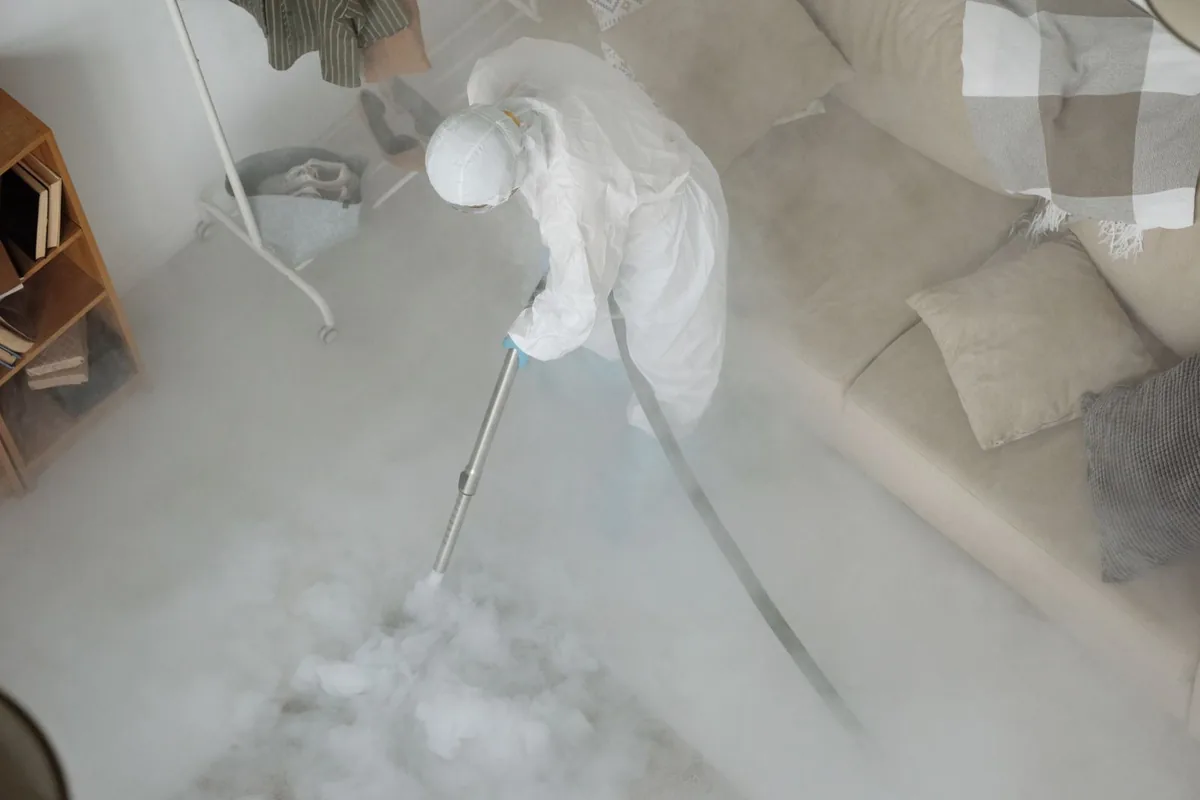
A biohazard is any biological material that can make people sick, and biohazard cleanup is the work of making the affected area safe again. It goes well beyond mopping, because germs can soak into porous materials.
Looking for a local biohazard cleaning company in Josephine or elsewhere in Collin County? Call Josephine Biohazard Cleanup Help. Your cleanup team wears protective gear, treats each surface with the right disinfectant and deals with regulated waste by the rules.
Even where older adults living alone are less common, as in Collin County, an unattended death can leave behind fluids that only a biohazard crew should handle. When the Collin County Sheriff's Office has released a scene in Collin County, the cleanup team can begin containment, removal and disinfection.
Biohazard Cleanup in Josephine usually includes:
The crew leader asks about the people, the property and any concerns about privacy. Equipment is packed to match the type of contamination.
The team arrives in an unmarked vehicle and works quietly. Protective gear goes on at the door and the work area is isolated right away.
Visible material is picked up first. Soaked carpet, padding and other porous items are cut out, sealed and set aside, and the remaining surfaces are scrubbed.
An EPA-registered disinfectant stays wet on each surface for its full contact time. The team treats odor, hauls waste and checks the work before leaving.
Biohazard cleanup in Josephine, TX typically costs $1,500 to $25,000, depending on the size of the affected area and the materials involved.
Insurance can offset the cost. Many homeowners and renters policies cover biohazard cleanup after a covered event, so it helps to call the insurer before work begins and keep every receipt.
| Type of job | Typical range |
|---|---|
| Residential average range | $1,800 - $4,500 |
| Typical national range | $3,000 - $5,000 |
| Full published span | $1,500 - $25,000+ |
| Most residential projects | $2,500 - $8,000 |
These ranges come from published cost guides (Fixr, Yelp Costs, Biohazard cleanup cost guide from a biohazard cleanup company) and are not a quote for Josephine. Price drivers include type of contamination, size of the affected area, how far fluids soaked into porous materials, waste handling and disposal. For a real number, call (877) 812-4220.
Frequently. If a policy covers the event, it can pay after the deductible. The Texas Crime Victims' Compensation Program, run by the Office of the Attorney General, pays up to $2,250 for crime scene clean-up for crimes after July 14, 2016, with insurance used first and claims filed within three years. Questions go to (800) 983-9933.
A small spill on a hard floor can take a few hours. Larger scenes, soaked carpet and subfloor, or heavy odor take longer. The crew can give a better timeline after seeing the site.
It is not recommended. Bloodborne pathogens can survive on surfaces, and household products often miss germs that soaked into porous materials. Professional crews use PPE, sealed containers and disinfectants that match the hazard.
Specialized biohazard cleaners do the work, not police, firefighters or ordinary cleaning services. After law enforcement releases a scene, the owner, family or property manager hires a cleanup company. The crew takes care of removal, disinfection and waste.
Contaminated materials are sealed, labeled and hauled as regulated medical waste, not put in household trash. In Texas, companies that haul other people's untreated medical waste register with the Texas Commission on Environmental Quality. Ask the cleanup team how its waste is handled.
The OSHA Bloodborne Pathogens Standard, 29 CFR 1910.1030, protects workers who may contact blood or other infectious material. Professional crews follow its rules on PPE, handling and waste. Employers have their own duties, and safety staff can explain them.
One call starts the process, and you decide whether to go ahead.
Call (877) 812-4220